
If you are a young doctor in Pakistan preparing for house job, FCPS induction, PLAB, USMLE, Gulf applications, hospital recruitment, or a job switch, you may be asking one simple question: what happens in BLS course? This guide explains the complete class experience in easy words.
Table of Contents
Why BLS Matters for Young Pakistani Doctors
Imagine you are on your first emergency duty in Lahore. A patient suddenly collapses near the triage area. The attendants panic, the nurse calls for help, and all eyes turn toward the doctor on duty. At that moment, your confidence does not come from theory alone. It comes from practiced hands, correct sequence, fast decision-making, and the ability to start high-quality CPR without freezing.
This is exactly why Basic Life Support is important. BLS is not just a certificate for your CV. It is a practical clinical skill. It teaches you how to recognize cardiac arrest, start chest compressions, give effective breaths, use an AED, work with a team, and manage choking emergencies. For Pakistani doctors who want to work abroad, apply for induction, enter emergency departments, join ICUs, or improve hospital employability, an AHA BLS certificate is often treated as an essential professional requirement.
A Scenario-Based Look: Before and After BLS Training
Before BLS training, many doctors know CPR in theory but hesitate during real emergencies. They may be unsure about hand placement, compression depth, ventilation timing, AED pad placement, or how to rotate compressors during two-rescuer CPR.
After a structured AHA BLS class, the response becomes more organized. You check responsiveness, call for help, assess breathing and pulse, start compressions, ask for an AED, give breaths with a barrier device or bag-mask, follow AED prompts, and continue CPR in cycles. You also learn how to communicate clearly with another rescuer. This is why hospitals, training programs, and employers value BLS-trained healthcare professionals.
What Happens in BLS Course?
The most common question students ask is: what happens in BLS course? In a typical AHA BLS class, the session is practical, skills-focused, and instructor-led. The class usually begins with an introduction to the Chain of Survival and the importance of early recognition, early CPR, early defibrillation, and effective teamwork.
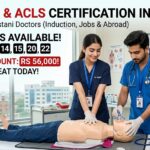
After the introduction, you move into hands-on practice. You do not only listen to a lecture. You practice CPR on manikins, learn correct compression technique, use AED trainers, practice rescue breathing, and understand how to respond to adult, child, and infant emergencies. The instructor corrects your technique and guides you until your compressions, breaths, and sequence become more accurate.
For doctors from Lahore, Rawalpindi, and Islamabad, this training is useful because it matches the type of emergency situations seen in wards, ERs, clinics, ICUs, and ambulance transfers. It is especially useful for house officers, medical officers, postgraduate trainees, nurses, dentists, paramedics, and doctors preparing for international pathways.
Skills You Practice in an AHA BLS Class
1. High-Quality CPR
You practice chest compressions with proper hand placement, rate, depth, recoil, and minimum interruptions. The goal is not just to “press the chest.” The goal is to deliver effective compressions that can maintain blood flow during cardiac arrest.
2. AED Use
You learn how to use an Automated External Defibrillator. Many doctors feel nervous the first time they see an AED. In class, you learn how to switch it on, attach pads, follow prompts, clear the patient safely, and continue CPR after shock or no-shock advice.
3. Rescue Breathing and Ventilation
You practice giving breaths with a barrier device and understand effective ventilation. This is important in hospital and emergency settings where airway support is part of early resuscitation.
4. Choking Relief
BLS also covers foreign-body airway obstruction. You learn how to respond when an adult, child, or infant is choking. This is a simple skill, but it can become lifesaving in clinics, wards, homes, and public places.
5. Team-Based CPR
In real hospital emergencies, CPR is rarely a one-person job. You learn how two rescuers coordinate compressions, breaths, AED use, and role switching. This prepares you for code blue situations where communication and timing matter.
How Are You Assessed in a BLS Class?
The assessment checks whether you can perform the skills correctly. You may be assessed on adult CPR, AED use, bag-mask or ventilation skills, infant CPR, choking response, and key knowledge points. The purpose is not to confuse you. The purpose is to confirm that you can perform BLS safely and confidently.
Students should revise the basic sequence before class, attend with focus, and take hands-on practice seriously. If you are applying abroad or submitting documents for a hospital job, the certificate matters. But in actual patient care, your skill matters even more.
Why BLS and ACLS Are Mandatory for Doctors
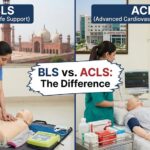
BLS is the foundation. ACLS builds on that foundation. BLS teaches early CPR, AED use, and basic emergency response. ACLS goes further into cardiac arrest management, ECG rhythm recognition, drugs, airway decisions, team leadership, and megacode-style emergency management.
For doctors who want to work in emergency medicine, anesthesia, ICU, cardiology, medicine, surgery, or critical care areas, BLS and ACLS are often expected by employers and training bodies. Many international hospitals also prefer applicants who already hold valid life support certification. For induction programs, these certificates can strengthen your profile because they show that you are ready for clinical responsibility.
If you are planning to take both courses, the AHA BLS + ACLS Combo Course can be a better option because it covers both basic and advanced emergency response skills.
AHA BLS and ACLS Course Fees
| Course | Best For | Fee | Registration Link |
|---|---|---|---|
| AHA BLS Provider | Doctors, nurses, medical students, dentists, paramedics, induction applicants, overseas job applicants | Rs 22,000 | Register for BLS |
| AHA ACLS Provider | Doctors working in ER, ICU, anesthesia, medicine, cardiology, surgery, and critical care areas | Rs 36,000 | Register for ACLS |
| AHA BLS + ACLS Combo | Doctors who need both certificates for career growth, induction, or international applications | Rs 56,000 | Book Combo Package |
| ECG & Pharmacology Course | Doctors preparing for ACLS, code blue, rhythm recognition, and emergency medication concepts | Check latest fee | View ECG & Pharmacology |
July 2026 Schedule for AHA BLS
Seats can fill quickly, especially near induction deadlines and overseas application seasons. Doctors from Lahore, Rawalpindi, and Islamabad should book early and confirm the latest availability before payment.
| Date | Day | Status |
|---|---|---|
| July 13, 2026 | Monday | Available |
| July 18, 2026 | Saturday | Available |
| July 20, 2026 | Monday | Available |
| July 25, 2026 | Saturday | Available |
| July 27, 2026 | Monday | Available |
Important Note About Registration
AHA BLS & ACLS Lahore Online works as a registration facilitation platform and helps healthcare professionals connect with verified AHA training centers. Certificates are issued by the respective authorized centers after successful course completion. Always confirm your slot, course type, payment details, and certificate process before final registration.
Frequently Asked Questions
What happens in BLS course?
You learn and practice CPR, AED use, rescue breathing, choking relief, and team-based response for adult, child, and infant emergencies. The class is hands-on and includes skills assessment.
Is AHA BLS important for Pakistani doctors?
Yes. It is important for clinical confidence, hospital jobs, induction applications, emergency duties, ICU work, and overseas career pathways.
Is BLS required before ACLS?
BLS is the foundation for ACLS. Doctors should be confident in CPR, AED use, and basic resuscitation skills before joining ACLS.
What is the AHA BLS fee?
The AHA BLS fee is Rs 22,000.
What is the AHA ACLS fee?
The AHA ACLS fee is Rs 36,000.
Is there a BLS and ACLS combo discount?
Yes. The AHA BLS + ACLS combo discounted fee is Rs 56,000.
Who should take this course?
Doctors, nurses, medical students, dentists, paramedics, medical officers, house officers, postgraduate trainees, and healthcare professionals applying for jobs or training programs should take BLS.
Can doctors from Rawalpindi and Islamabad register?
Yes. Doctors from Lahore, Rawalpindi, Islamabad, and nearby cities can register and confirm available dates through the WhatsApp channel or course registration links.
Book Your AHA BLS Seat for July 2026
If you are preparing for induction, applying abroad, switching jobs, or starting emergency duty, do not wait until the last week. Choose your course, confirm the date, and reserve your seat early.