
The Transition from “Student” to “Doctor”
Congratulations! You have survived five grueling years of MBBS or four years of BDS. You have passed your profs, celebrated your farewell at the Pearl Continental, and now you are ready for the real world: The House Job.
Whether you are aiming for a slot at Mayo, Jinnah, Services, or Sheikh Zayed Hospital, the application process can be overwhelming. You are no longer just dealing with books; you are dealing with hospital administration.
To make your transition smoother, we have compiled the ultimate checklist of things you need to have ready before your induction begins.
1. PMDC Provisional License
You cannot practice medicine—even as an intern—without this.
- The Hassle: It can take weeks to process.
- ** The Tip:** Apply immediately after your final results are declared. Do not wait for the physical degree; your provisional certificate from the university is usually enough to start the PMDC application.
2. A Professional CV (Not a Student Resume)
Hospital HR departments see thousands of applications. Your CV needs to look like a doctor’s, not a student’s.
- Focus on: Clinical electives, research (even small projects), and volunteer work.
- Remove: High school grades or non-relevant hobbies. Keep it clean, one page, and professional.
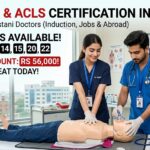
3. Valid AHA BLS Certification (The “Must-Have”)
In the past, BLS training was something you learned “on the job.” Not anymore. Top hospitals in Lahore now expect you to be certified before you enter the ward.
- Why? On Day 1, if a patient collapses, you are often the first responder. If you don’t know the exact 2025 AHA algorithm for compressions and ventilation, you are a liability.
- The Standard: Make sure it is an American Heart Association (AHA) course. Local certificates are often rejected during the induction interview process.
4. Comfortable Scrubs & Shoes
You will be standing for 12 to 36 hours. This is not the time for fashion; it is the time for survival.
- Scrubs: Invest in 3-4 pairs of high-quality scrubs. Dark colors (Navy Blue, Maroon) hide stains better.
- Shoes: Buy the most comfortable sneakers or Crocs you can afford. Your back will thank you three months from now.
5. A “Survival Kit” for Calls
You will practically live in the hospital during your rotation. Pack a small bag with:
- Power bank: Your phone is your lifeline for labs and senior calls.
- High-protein snacks: You will miss lunch.
- Pocket handbook: (Oxford Handbook of Clinical Medicine is a lifesaver).
- Stethoscope: Don’t be the intern who has to borrow one!
Conclusion: Hit the Ground Running
Your house job is the foundation of your entire medical career. It is where you learn to be a doctor.
Don’t let missing paperwork or a lack of skills hold you back. Get your PMDC license sorted, buy your scrubs, and secure your AHA BLS Certification with us at ahablslahore.online.
Walk into the ward on your first day with confidence, knowing you are ready to save a life.